

What to Expect at a Veterinary Ophthalmology Appointment
If your pet has an eye problem, your family veterinarian may recommend a veterinary ophthalmology appointment. For many pet owners, that referral can bring both relief and uncertainty. You want answers, but you may not know what a pet eye specialist does or what will happen during the visit.
A veterinary ophthalmology appointment is designed to evaluate your pet’s eyes, vision, comfort, and overall eye health in greater detail. The goal is to understand what is causing your pet’s symptoms and create a plan to help protect comfort, vision, and quality of life whenever possible.
Why Your Pet Might Be Referred to a Veterinary Ophthalmologist
A veterinary ophthalmologist has advanced training in diagnosing and treating eye diseases and injuries in animals. Your primary veterinarian may recommend specialty eye care if your pet has a more complex, painful, recurring, or vision-related concern.
Common reasons for referral include:
- Cloudy eyes
- Cataracts
- Glaucoma
- Corneal ulcers
- Eye trauma
- Chronic redness
- Squinting or signs of eye pain
- Excessive tearing or discharge
- Eyelid problems
- Sudden or progressive vision loss
- Retinal disease
- Eye pressure concerns
- Eye issues related to diabetes or other health conditions
- Conditions that are not improving as expected
Some pets are referred after an emergency visit. Others are referred because a problem has been developing gradually and needs advanced diagnostics or treatment.
Before the Appointment
Before your pet’s ophthalmology appointment, gather any information that may help the specialist understand the full picture.
Helpful items may include:
- A list of your pet’s current medications
- Eye medications your pet is using or has used recently
- Your pet’s medical history
- Notes about when symptoms started
- Photos or videos of changes you have noticed
- Information about recent injuries or illnesses
- Details about behavior changes, vision changes, or pain signs
- Questions you want to ask during the visit
If your pet has been prescribed eye drops or other medications, bring them with you or take clear photos of the labels. It is also helpful to know when the last dose was given.
What the Ophthalmology Team Will Ask
The appointment often begins with a discussion of your pet’s history and symptoms. The team may ask when you first noticed a problem, whether symptoms came on suddenly or gradually, and whether one or both eyes are affected.
They may also ask questions such as:
- Is your pet squinting or rubbing the eye?
- Have you noticed redness, discharge, tearing, or cloudiness?
- Is your pet bumping into objects?
- Does your pet seem hesitant in dim light or unfamiliar places?
- Has your pet had previous eye problems?
- Has there been any trauma to the head, face, or eye?
- Does your pet have diabetes or another medical condition?
- Is your pet currently using any eye medications?
These details help guide the exam and diagnostic plan.
The Eye Exam
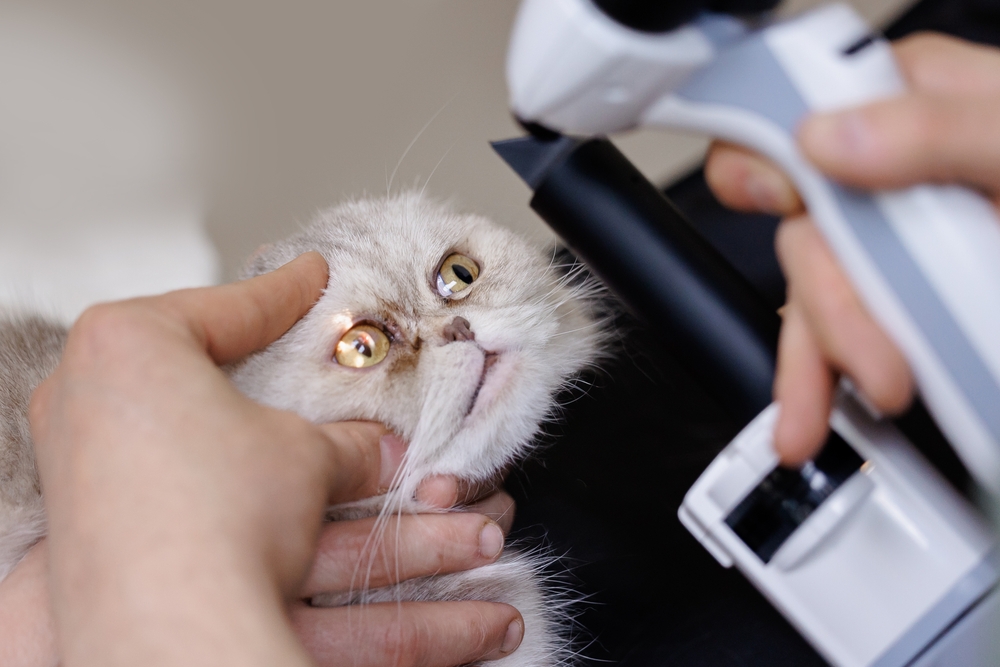
A veterinary ophthalmology exam is more detailed than a routine wellness eye check. The ophthalmologist evaluates the structures of the eye, eye comfort, eye pressure, vision, and signs of disease or injury.
Depending on your pet’s symptoms, the exam may include:
- Checking how your pet responds to light and movement
- Looking closely at the eyelids, lashes, cornea, lens, and other eye structures
- Evaluating the surface of the eye
- Measuring tear production
- Checking eye pressure
- Looking for scratches, ulcers, inflammation, or other abnormalities
- Examining the back of the eye when possible
Most eye tests are quick and well-tolerated. Some pets may be nervous, but the team will work to keep the visit as calm and comfortable as possible.
Common Eye Tests Pet Owners May Hear About
Your pet’s ophthalmology visit may include diagnostic tests with unfamiliar names. The ophthalmology team will explain which tests are needed and why.
Common tests may include:
Tear testing: This helps measure whether your pet is producing enough tears.
Eye pressure testing: This helps evaluate pressure inside the eye, which can be important when glaucoma is a concern.
Fluorescein stain: A special dye may be used to check for scratches, ulcers, or damage on the surface of the eye.
Detailed eye examination: Specialized equipment allows the ophthalmologist to examine parts of the eye more closely.
These tests help the specialist identify the cause of symptoms and recommend the most appropriate treatment.
Will the Appointment Hurt?
Most parts of an ophthalmology exam are not painful. Some pets may feel anxious simply because they are in a new place or because their eyes are already uncomfortable.
If your pet’s eye is painful, the team will handle your pet gently and may use appropriate medications or techniques to make the exam more comfortable. The goal is to get important information while minimizing stress.
What Happens After the Exam?
After the exam and diagnostic testing, the veterinary ophthalmologist will discuss the findings with you. They may explain the diagnosis, treatment options, expected outcome, and what to watch for at home.
Your pet’s plan may include:
- Eye drops or ointments
- Oral medications
- Recheck appointments
- Protective measures, such as an e-collar
- Activity restrictions
- Monitoring instructions
- Surgery, if needed
- Coordination with your primary veterinarian
Some eye conditions require ongoing management. Others may improve with medication or need more urgent intervention.
Questions to Ask During the Visit
It can be helpful to bring a short list of questions. Consider asking:
- What is causing my pet’s eye problem?
- Is my pet in pain?
- Is vision affected?
- Is the condition likely to improve, stay the same, or progress?
- What are the treatment options?
- How often should I give medications?
- What side effects should I watch for?
- Does my pet need an e-collar?
- Are there activity restrictions?
- When should we schedule a recheck?
- What symptoms would be an emergency?
Do not hesitate to ask for clarification. Eye conditions can sound complicated, and the team wants you to understand your pet’s care plan.
When Eye Symptoms Are Urgent
Some eye problems should not wait for a routine appointment. Contact your veterinarian or an emergency veterinary hospital promptly if your pet has:
- Sudden blindness
- Severe squinting
- A painful or closed eye
- A bulging eye
- Sudden cloudiness
- Eye trauma
- Blood in or around the eye
- Unequal pupils
- Significant redness or swelling
- A visible scratch, puncture, or foreign object
- Rapidly worsening symptoms
Eye problems can progress quickly, and prompt care may help protect comfort and vision.
Specialty Eye Care Helps Pet Parents Get Answers
A veterinary ophthalmology appointment can feel intimidating at first, but it is an important step toward understanding your pet’s eye health. Whether your pet has a painful eye, vision changes, cataracts, glaucoma, a corneal injury, or another concern, a detailed exam can help guide the next steps.
At Oakland Veterinary Referral Services, the ophthalmology team works with your primary veterinarian to evaluate eye problems and recommend care for your pet’s comfort, vision, and quality of life.
If your pet has been referred to a veterinary ophthalmologist or if you are concerned about changes in your pet’s eyes or vision, specialty care can help provide answers and support.If your pet has an eye problem, your family veterinarian may recommend a veterinary ophthalmology appointment. For many pet owners, that referral can bring both relief and uncertainty. You want answers, but you may not know what a pet eye specialist does or what will happen during the visit.
A veterinary ophthalmology appointment is designed to evaluate your pet’s eyes, vision, comfort, and overall eye health in greater detail. The goal is to understand what is causing your pet’s symptoms and create a plan to help protect comfort, vision, and quality of life whenever possible.
Why Your Pet Might Be Referred to a Veterinary Ophthalmologist
A veterinary ophthalmologist has advanced training in diagnosing and treating eye diseases and injuries in animals. Your primary veterinarian may recommend specialty eye care if your pet has a more complex, painful, recurring, or vision-related concern.
Common reasons for referral include:
- Cloudy eyes
- Cataracts
- Glaucoma
- Corneal ulcers
- Eye trauma
- Chronic redness
- Squinting or signs of eye pain
- Excessive tearing or discharge
- Eyelid problems
- Sudden or progressive vision loss
- Retinal disease
- Eye pressure concerns
- Eye issues related to diabetes or other health conditions
- Conditions that are not improving as expected
Some pets are referred after an emergency visit. Others are referred because a problem has been developing gradually and needs advanced diagnostics or treatment.
Before the Appointment
Before your pet’s ophthalmology appointment, gather any information that may help the specialist understand the full picture.
Helpful items may include:
- A list of your pet’s current medications
- Eye medications your pet is using or has used recently
- Your pet’s medical history
- Notes about when symptoms started
- Photos or videos of changes you have noticed
- Information about recent injuries or illnesses
- Details about behavior changes, vision changes, or pain signs
- Questions you want to ask during the visit
If your pet has been prescribed eye drops or other medications, bring them with you or take clear photos of the labels. It is also helpful to know when the last dose was given.
What the Ophthalmology Team Will Ask
The appointment often begins with a discussion of your pet’s history and symptoms. The team may ask when you first noticed a problem, whether symptoms came on suddenly or gradually, and whether one or both eyes are affected.
They may also ask questions such as:
- Is your pet squinting or rubbing the eye?
- Have you noticed redness, discharge, tearing, or cloudiness?
- Is your pet bumping into objects?
- Does your pet seem hesitant in dim light or unfamiliar places?
- Has your pet had previous eye problems?
- Has there been any trauma to the head, face, or eye?
- Does your pet have diabetes or another medical condition?
- Is your pet currently using any eye medications?
These details help guide the exam and diagnostic plan.
The Eye Exam
A veterinary ophthalmology exam is more detailed than a routine wellness eye check. The ophthalmologist evaluates the structures of the eye, eye comfort, eye pressure, vision, and signs of disease or injury.
Depending on your pet’s symptoms, the exam may include:
- Checking how your pet responds to light and movement
- Looking closely at the eyelids, lashes, cornea, lens, and other eye structures
- Evaluating the surface of the eye
- Measuring tear production
- Checking eye pressure
- Looking for scratches, ulcers, inflammation, or other abnormalities
- Examining the back of the eye when possible
Most eye tests are quick and well-tolerated. Some pets may be nervous, but the team will work to keep the visit as calm and comfortable as possible.
Common Eye Tests Pet Owners May Hear About
Your pet’s ophthalmology visit may include diagnostic tests with unfamiliar names. The ophthalmology team will explain which tests are needed and why.
Common tests may include:
Tear testing: This helps measure whether your pet is producing enough tears.
Eye pressure testing: This helps evaluate pressure inside the eye, which can be important when glaucoma is a concern.
Fluorescein stain: A special dye may be used to check for scratches, ulcers, or damage on the surface of the eye.
Detailed eye examination: Specialized equipment allows the ophthalmologist to examine parts of the eye more closely.
These tests help the specialist identify the cause of symptoms and recommend the most appropriate treatment.
Will the Appointment Hurt?
Most parts of an ophthalmology exam are not painful. Some pets may feel anxious simply because they are in a new place or because their eyes are already uncomfortable.
If your pet’s eye is painful, the team will handle your pet gently and may use appropriate medications or techniques to make the exam more comfortable. The goal is to get important information while minimizing stress.
What Happens After the Exam?
After the exam and diagnostic testing, the veterinary ophthalmologist will discuss the findings with you. They may explain the diagnosis, treatment options, expected outcome, and what to watch for at home.
Your pet’s plan may include:
- Eye drops or ointments
- Oral medications
- Recheck appointments
- Protective measures, such as an e-collar
- Activity restrictions
- Monitoring instructions
- Surgery, if needed
- Coordination with your primary veterinarian
Some eye conditions require ongoing management. Others may improve with medication or need more urgent intervention.
Questions to Ask During the Visit
It can be helpful to bring a short list of questions. Consider asking:
- What is causing my pet’s eye problem?
- Is my pet in pain?
- Is vision affected?
- Is the condition likely to improve, stay the same, or progress?
- What are the treatment options?
- How often should I give medications?
- What side effects should I watch for?
- Does my pet need an e-collar?
- Are there activity restrictions?
- When should we schedule a recheck?
- What symptoms would be an emergency?
Do not hesitate to ask for clarification. Eye conditions can sound complicated, and the team wants you to understand your pet’s care plan.
When Eye Symptoms Are Urgent
Some eye problems should not wait for a routine appointment. Contact your veterinarian or an emergency veterinary hospital promptly if your pet has:
- Sudden blindness
- Severe squinting
- A painful or closed eye
- A bulging eye
- Sudden cloudiness
- Eye trauma
- Blood in or around the eye
- Unequal pupils
- Significant redness or swelling
- A visible scratch, puncture, or foreign object
- Rapidly worsening symptoms
Eye problems can progress quickly, and prompt care may help protect comfort and vision.
Specialty Eye Care Helps Pet Parents Get Answers
A veterinary ophthalmology appointment can feel intimidating at first, but it is an important step toward understanding your pet’s eye health. Whether your pet has a painful eye, vision changes, cataracts, glaucoma, a corneal injury, or another concern, a detailed exam can help guide the next steps.
At Oakland Veterinary Referral Services, the ophthalmology team works with your primary veterinarian to evaluate eye problems and recommend care for your pet’s comfort, vision, and quality of life.
If your pet has been referred to a veterinary ophthalmologist or if you are concerned about changes in your pet’s eyes or vision, specialty care can help provide answers and support.If your pet has an eye problem, your family veterinarian may recommend a veterinary ophthalmology appointment. For many pet owners, that referral can bring both relief and uncertainty. You want answers, but you may not know what a pet eye specialist does or what will happen during the visit.
A veterinary ophthalmology appointment is designed to evaluate your pet’s eyes, vision, comfort, and overall eye health in greater detail. The goal is to understand what is causing your pet’s symptoms and create a plan to help protect comfort, vision, and quality of life whenever possible.
Why Your Pet Might Be Referred to a Veterinary Ophthalmologist
A veterinary ophthalmologist has advanced training in diagnosing and treating eye diseases and injuries in animals. Your primary veterinarian may recommend specialty eye care if your pet has a more complex, painful, recurring, or vision-related concern.
Common reasons for referral include:
- Cloudy eyes
- Cataracts
- Glaucoma
- Corneal ulcers
- Eye trauma
- Chronic redness
- Squinting or signs of eye pain
- Excessive tearing or discharge
- Eyelid problems
- Sudden or progressive vision loss
- Retinal disease
- Eye pressure concerns
- Eye issues related to diabetes or other health conditions
- Conditions that are not improving as expected
Some pets are referred after an emergency visit. Others are referred because a problem has been developing gradually and needs advanced diagnostics or treatment.
Before the Appointment
Before your pet’s ophthalmology appointment, gather any information that may help the specialist understand the full picture.
Helpful items may include:
- A list of your pet’s current medications
- Eye medications your pet is using or has used recently
- Your pet’s medical history
- Notes about when symptoms started
- Photos or videos of changes you have noticed
- Information about recent injuries or illnesses
- Details about behavior changes, vision changes, or pain signs
- Questions you want to ask during the visit
If your pet has been prescribed eye drops or other medications, bring them with you or take clear photos of the labels. It is also helpful to know when the last dose was given.
What the Ophthalmology Team Will Ask
The appointment often begins with a discussion of your pet’s history and symptoms. The team may ask when you first noticed a problem, whether symptoms came on suddenly or gradually, and whether one or both eyes are affected.
They may also ask questions such as:
- Is your pet squinting or rubbing the eye?
- Have you noticed redness, discharge, tearing, or cloudiness?
- Is your pet bumping into objects?
- Does your pet seem hesitant in dim light or unfamiliar places?
- Has your pet had previous eye problems?
- Has there been any trauma to the head, face, or eye?
- Does your pet have diabetes or another medical condition?
- Is your pet currently using any eye medications?
These details help guide the exam and diagnostic plan.
The Eye Exam
A veterinary ophthalmology exam is more detailed than a routine wellness eye check. The ophthalmologist evaluates the structures of the eye, eye comfort, eye pressure, vision, and signs of disease or injury.
Depending on your pet’s symptoms, the exam may include:
- Checking how your pet responds to light and movement
- Looking closely at the eyelids, lashes, cornea, lens, and other eye structures
- Evaluating the surface of the eye
- Measuring tear production
- Checking eye pressure
- Looking for scratches, ulcers, inflammation, or other abnormalities
- Examining the back of the eye when possible
Most eye tests are quick and well-tolerated. Some pets may be nervous, but the team will work to keep the visit as calm and comfortable as possible.
Common Eye Tests Pet Owners May Hear About
Your pet’s ophthalmology visit may include diagnostic tests with unfamiliar names. The ophthalmology team will explain which tests are needed and why.
Common tests may include:
Tear testing: This helps measure whether your pet is producing enough tears.
Eye pressure testing: This helps evaluate pressure inside the eye, which can be important when glaucoma is a concern.
Fluorescein stain: A special dye may be used to check for scratches, ulcers, or damage on the surface of the eye.
Detailed eye examination: Specialized equipment allows the ophthalmologist to examine parts of the eye more closely.
These tests help the specialist identify the cause of symptoms and recommend the most appropriate treatment.
Will the Appointment Hurt?
Most parts of an ophthalmology exam are not painful. Some pets may feel anxious simply because they are in a new place or because their eyes are already uncomfortable.
If your pet’s eye is painful, the team will handle your pet gently and may use appropriate medications or techniques to make the exam more comfortable. The goal is to get important information while minimizing stress.
What Happens After the Exam?
After the exam and diagnostic testing, the veterinary ophthalmologist will discuss the findings with you. They may explain the diagnosis, treatment options, expected outcome, and what to watch for at home.
Your pet’s plan may include:
- Eye drops or ointments
- Oral medications
- Recheck appointments
- Protective measures, such as an e-collar
- Activity restrictions
- Monitoring instructions
- Surgery, if needed
- Coordination with your primary veterinarian
Some eye conditions require ongoing management. Others may improve with medication or need more urgent intervention.
Questions to Ask During the Visit
It can be helpful to bring a short list of questions. Consider asking:
- What is causing my pet’s eye problem?
- Is my pet in pain?
- Is vision affected?
- Is the condition likely to improve, stay the same, or progress?
- What are the treatment options?
- How often should I give medications?
- What side effects should I watch for?
- Does my pet need an e-collar?
- Are there activity restrictions?
- When should we schedule a recheck?
- What symptoms would be an emergency?
Do not hesitate to ask for clarification. Eye conditions can sound complicated, and the team wants you to understand your pet’s care plan.
When Eye Symptoms Are Urgent
Some eye problems should not wait for a routine appointment. Contact your veterinarian or an emergency veterinary hospital promptly if your pet has:
- Sudden blindness
- Severe squinting
- A painful or closed eye
- A bulging eye
- Sudden cloudiness
- Eye trauma
- Blood in or around the eye
- Unequal pupils
- Significant redness or swelling
- A visible scratch, puncture, or foreign object
- Rapidly worsening symptoms
Eye problems can progress quickly, and prompt care may help protect comfort and vision.
Specialty Eye Care Helps Pet Parents Get Answers
A veterinary ophthalmology appointment can feel intimidating at first, but it is an important step toward understanding your pet’s eye health. Whether your pet has a painful eye, vision changes, cataracts, glaucoma, a corneal injury, or another concern, a detailed exam can help guide the next steps.
At Oakland Veterinary Referral Services, the ophthalmology team works with your primary veterinarian to evaluate eye problems and recommend care for your pet’s comfort, vision, and quality of life.
If your pet has been referred to a veterinary ophthalmologist or if you are concerned about changes in your pet’s eyes or vision, specialty care can help provide answers and support.