

Exercises to Keep Dogs Strong
Just like people, dogs benefit from regular exercise to stay strong, mobile, and healthy. Beyond daily walks, incorporating targeted exercises into your dog’s routine can help build muscle, support joint health, and even prevent injuries over time.
Whether you have an energetic young dog or a slowing senior, the right exercises can make a meaningful difference in their quality of life.
Why Strength Matters for Dogs
Muscle strength plays a key role in your dog’s overall health. Strong muscles help stabilize joints, improve balance, and reduce the risk of injury—especially as dogs age or recover from medical conditions.
Strength-building exercises for your dog can also:
- Support joint health and reduce strain
- Improve coordination and balance
- Aid in injury recovery and rehabilitation
- Enhance athletic performance
- Promote healthy weight management
Even a few minutes a day can have long-term benefits.
Foundational Strength Exercises
These simple exercises can be done at home and are appropriate for many dogs, with adjustments based on age and ability.
- Sit-to-Stand Repetitions
Encourage your dog to move from a sit to a stand multiple times. This strengthens the hind limbs and core. - Controlled Leash Walks
Slow, steady walks—especially on slight inclines—help build muscle while improving endurance. - Weight Shifting
While your dog is standing, gently encourage them to shift their weight from side to side to engage stabilizing muscles. - Cavaletti Poles
Walking your dog over low, spaced-apart poles encourages joint flexion, coordination, and strength. - Figure-8 Walking
Guide your dog in a figure-8 pattern to improve balance and body awareness.
Advanced Strength and Stability Exercises for Dogs
For dogs who are ready for a greater challenge, these exercises help build greater strength and control.
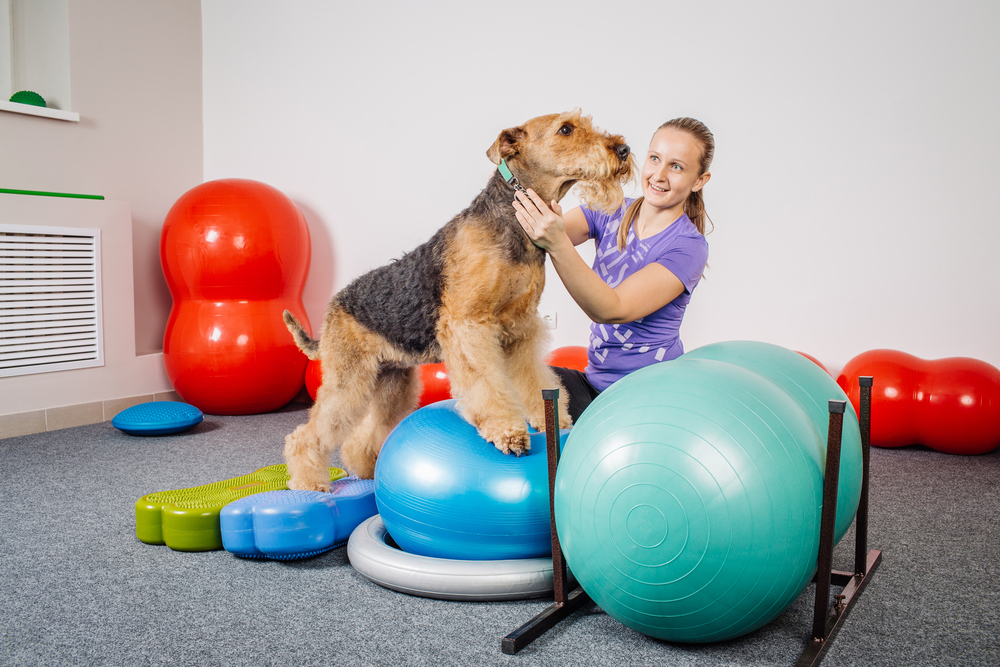
- Balance Disc or Cushion Work
Having your dog stand with front or rear paws on an unstable surface activates core and stabilizer muscles. - Three-Legged Stands
Briefly lifting one paw (when appropriate and safe) encourages balance and weight-bearing strength. - Hill or Incline Walking
Walking uphill builds rear limb strength, while downhill walking engages control and stability. - Backing Up (Reverse Walking)
Encouraging your dog to walk backward strengthens muscles that are often underused.
Exercises for Senior Dogs
Older dogs still benefit greatly from strength exercises—though they may need gentler, low-impact options due to arthritis. Here is more information about helping your arthritic pet get more exercise.
- Short, frequent walks instead of long sessions
- Sit-to-stand exercises at a slower pace
- Gentle range-of-motion movements
- Light balance work on stable surfaces
Maintaining strength in senior dogs can help preserve independence, reduce pain, and slow the progression of arthritis.
Safety Tips to Keep in Mind
Before starting any new exercise routine, it’s important to keep your dog’s safety and comfort in mind.
- Start slowly and build up gradually
- Watch for signs of fatigue or discomfort
- Use non-slip surfaces to prevent injury
- Keep sessions short and positive
- Always warm up with light activity first
If your dog has an existing medical condition or injury, consult your veterinarian before introducing new exercises.
When to Seek Professional Guidance
Some dogs benefit from a more structured or medically guided exercise plan—especially those building strength after surgery, dealing with chronic pain, or experiencing mobility issues.
Veterinary rehabilitation specialists and sports medicine teams can create customized programs to safely build strength and support healing.
Stronger Dogs, Healthier Lives
Keeping your dog strong isn’t just about fitness—it’s about helping them move comfortably, avoid injury, and enjoy life to the fullest.
With a consistent routine and the right mix of exercises, you can support your dog’s strength at every stage of life.At Oakland Veterinary Referral Services (OVRS), our team includes specialists in orthopedics who are dedicated to helping pets stay active and pain-free. If your dog is experiencing mobility issues or recovering from an injury, we’re here to help guide you toward the best care plan for their needs.